
North America
North America

American Critical Resources (ACR), a subsidiary of Controlled Thermal Resources Holdings Inc. (CTR), has signed a non-binding letter of intent with Plum Acquisition Corp. IV, a publicly listed special purpose acquisition company, to pursue a proposed business combination.
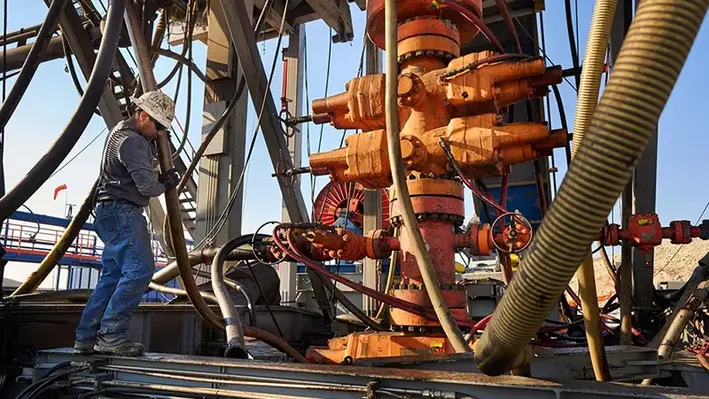
Chevron CEO Mike Wirth has outlined a pragmatic yet forward-looking vision for the energy transition, positioning biofuels and geothermal energy as key growth opportunities alongside the company’s core oil and gas business.

The chief executive of Chevron Corp., the US oil major, has spoken of the company’s interest in the USA's growing geothermal sector, among other alternative and renewable energies.
The head of one of the world’s largest oil companies, Mike Wirth acknowledged his interest in everything from carbon capture to hydrogen, as well as geothermal, during a recent industry event.
Wirth was speaking at the recent WSJ CEO Council, and was cited in an article afterwards by the Wall Street Journal newspaper.
During the event, the Chevron CEO touched on various new renewable energy business opportunities, alongside plans to grow its traditional oil and gas activities.
Other major Big Oil corporations, including ExxonMobil, are also actively exploring new and alternative energy technology opportunities, including lithium.
Cited by the WSJ article, Wirth noted that geothermal offers “real promise” despite some of the sector’s drilling methods and technologies only being at an early stage.
According to the article, Wirth said Chevron hopes to leverage its experience “to advance and scale novel geothermal energy, which can potentially allow access to a widespread baseload, non-intermittent resource that can complement and add capacity to meet the world’s growing renewable-power demand.”
Interest in the geothermal energy sector in the USA has been broadly encouraged in recent months by the Trump administration, a keen champion of the nation’s oil and gas industry.
In the WSJ article, Wirth noted that all energy sources — from oil and gas, to coal, nuclear, as well as geothermal and other renewable alternatives — will be in focus against a backdrop of rising global energy demand.
“There’s no silver bullet, we need it all,” he said at the conference, cited by WSJ.
Other major industry players, including traditional drilling and technology service providers to the oil and gas sector, such as Baker Hughes and Saipem, have also expressed an interest in the potential of geothermal energy and are exploring early opportunities.
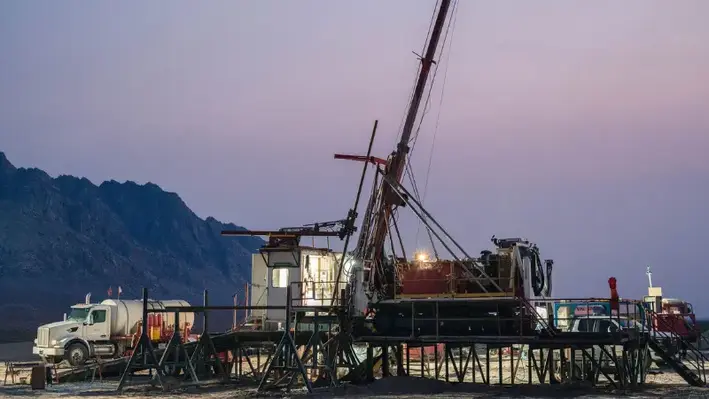
USA geothermal exploration company Zanskar has announced the discovery of ‘Big Blind’, the first commercial blind geothermal system in the US in over 30 years.
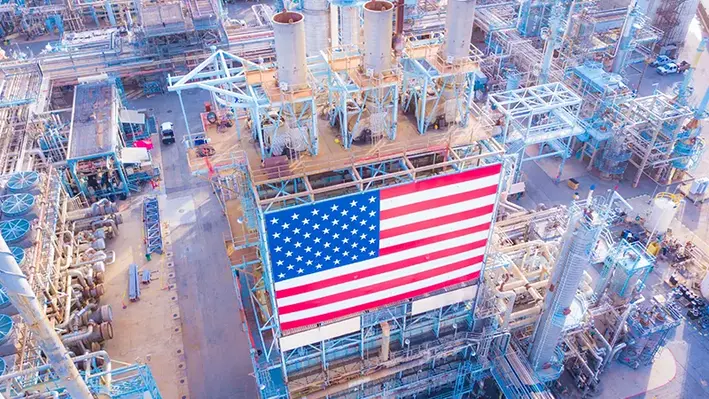
Geothermal could enhance US energy security, but only if it is prioritised, according to The Atlantic Council, a Washington DC-based thinktank established in 1961.
In a new report, it notes that geothermal energy offers reliable, 24/7 clean power with low supply-chain risks, thereby enhancing overall energy security in the US.
The Atlantic Council also argues that with policy support and new drilling technologies, geothermal could expand beyond limited regions, which characterises the sector currently.
High upfront costs and slow deployment remain challenges, but its firm, domestic power makes it strategically valuable, the paper, written by Paul Stahle, a senior energy advisor and government relations expert, notes.
It also comes at a time of rising electricity demand in the US.
After nearly a decade of flat growth, the US Energy Information Administration projects that annual demand across the country will grow 2.4% in 2025 and 2.6% in 2026.
“Meeting that demand affordably poses a formidable challenge,” The Atlantic Council notes.
“Oil and gas markets are volatile, while renewables have intermittency challenges and vulnerable supply chains. In this environment, accelerating the development of geothermal energy could help reduce exposure to these risks.”
Compared to solar, wind, or battery storage, geothermal power relies relatively less on critical minerals like cobalt and lithium, it adds, and, unlike oil and gas generation, geothermal requires no fuel.
As a result, geothermal can provide round-the-clock baseload power with lower exposure to disruptions in global supply chains, the paper adds.
“By prioritising the rapid development of geothermal, policymakers could help the United States build a unique path to energy security — one that delivers reliable power 24/7, insulated from global hydrocarbon markets and vulnerable supply chains,” it concludes.

Dominica is gearing up to commission its first geothermal power plant this month, according to a senior official from the Caribbean island state.
Finance Minister Dr. Irving McIntyre said the commissioning of the 10 MW plant in the Roseau Valley is set to begin during December, with commercial operations scheduled to start in March 2026.
Speaking to the nation’s Parliament, and cited by Dominca News Online, he called the project a milestone for Dominica’s renewable energy ambitions.
The country is also strengthening its transmission and distribution infrastructure to connect the plant as part of broader efforts to improve energy security and bring down costs on the island, drawing on loan funds from the World Bank.
“We are reminded that in addition to the government’s investment in geothermal power exploration and infrastructure,” he was quoted as saying by Dominica News Online, “government is investing in a first phase of high-voltage resilient transmission network which will connect the geothermal power plant.”
McIntyre said that these works are expected to be completed in time for the commercial operations of the geothermal power plant.
The launch will make Dominica the second member state of the Organisation of Eastern Caribbean States Commission (OECS) to commence geothermal power production.
Guadeloupe has been producing about 5% of its electricity from geothermal energy sources since 1986.
Other member states, such as St. Kitts and Nevis, are also advancing plans to tap into geothermal energy.
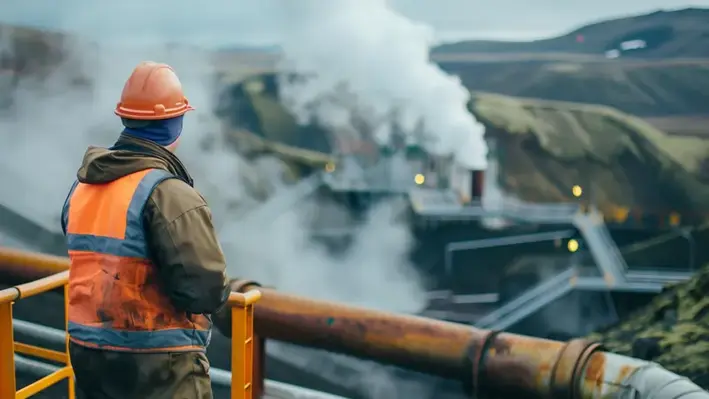
Global geothermal investment is entering a rapid expansion phase, with capital expenditure projected to rise by roughly 20% each year through 2030, based on Rystad Energy’s latest geothermal economics model.
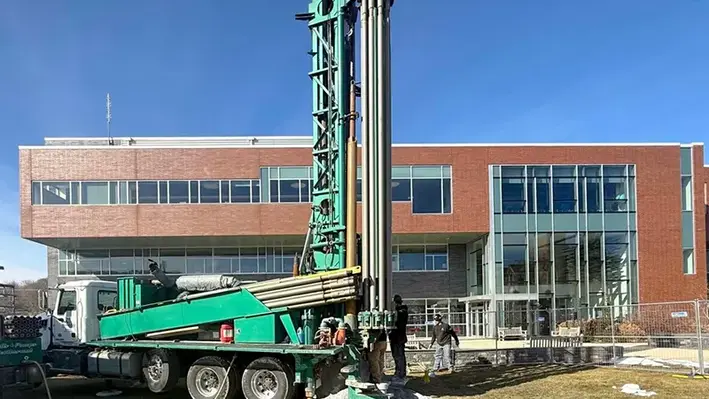
The University of Rhode Island (URI) is taking significant steps towards achieving net-zero carbon emissions, adopting a range of renewable energy solutions as part of its broader sustainability strategy.
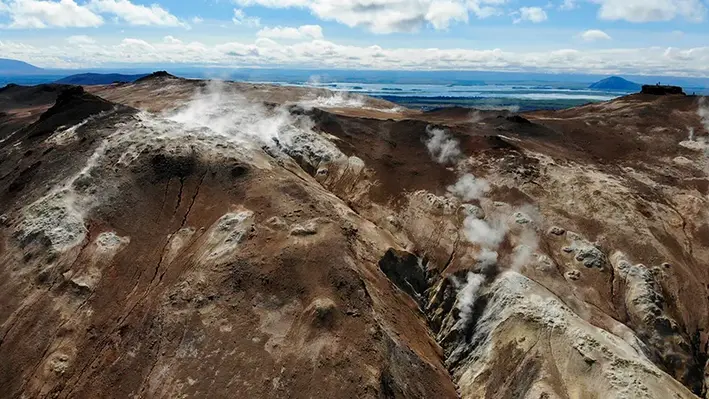
US-based Deep Fission Inc. is drawing on geothermal know-how and other proven techniques from across the energy sector as it develops a new approach to nuclear power.
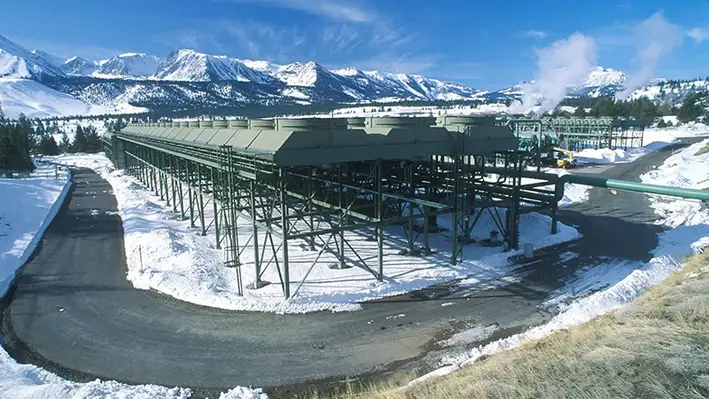
Geothermal energy is rapidly emerging as one of the most promising solutions in the global shift towards cleaner, more reliable power.
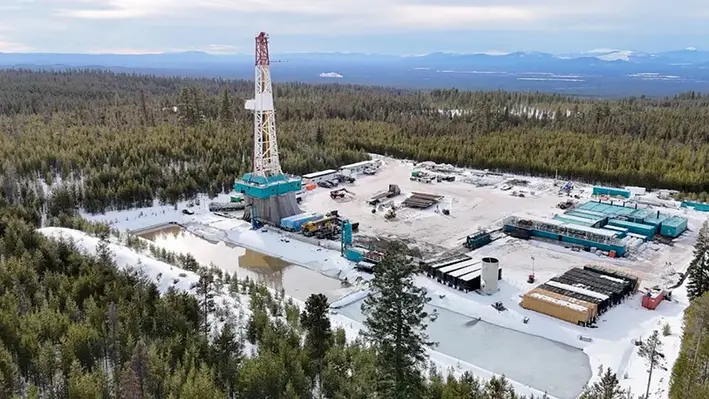
Mazama Energy, Inc., has announced a major advancement in clean energy with the creation of the world’s hottest Enhanced Geothermal System (EGS) at its pilot site in Newberry, Oregon.

In a further example of how geothermal is now successfully attracting more innovative financing, Good Carbon Co. (GCC) has closed a US$20mn loan with NY Green Bank (NYGB), to support the installation of geothermal heating and cooling systems across its housing portfolio in the Buffalo region.
The facility — the first publicly announced Investment Tax Credit (ITC) transferability bridge loan for geothermal heating and cooling technology — allows GCC to further accelerate its mission of developing deeply decarbonised affordable housing.
It is expected to finance around 25 geothermal systems at affordable multifamily housing properties in the area, in New York State.
“This initiative demonstrates how innovative financing can accelerate the transition to clean, equitable energy,” said Adam Serbert, GCC’s President and CEO.
“By pairing federal Investment Tax Credits with sustainable technologies like geothermal systems, we’re enabling affordable housing communities to benefit from stable, carbon-free energy for decades to come.”
The intention is to grow multifamily affordable housing developments in the Buffalo area, boosting energy efficiency, cutting fossil fuel reliance and helping keep energy costs steady for residents in the process.
Geothermal systems leverage underground heat to provide highly efficient, carbon-free HVAC services to residents and are eligible for full federal Investment Tax Credits if construction starts by the end of 2033.
By unlocking federal Investment Tax Credits, the facility will accelerate deployment of clean energy solutions while supporting equitable housing and community benefits, a GCC statement noted.
The new facility builds on an existing loan between GCC and NYGB, which provided bridge funding for state-level clean energy incentives that GCC’s renovations qualify for.
“NY Green Bank is proud to support Good Carbon Co. on this pioneering transaction,” said Kelsey Clair, NYGB’s Managing Director, Investment and Portfolio Management.
“As the first publicly announced ITC transferability bridge loan in geothermal, this deal demonstrates the viable investment opportunity of geothermal heating systems in a residential setting while also ensuring that more New Yorkers can enjoy comfortable heating and cooling in their homes.”